Question: Why does my dog yawn when I pet him?
Answer: Your dog might be yawning when you pet him for a variety of reasons. The most common reason is that it’s a calming signal, a way for your dog to communicate that he’s feeling slightly stressed, anxious, or conflicted. However, it could also be a sign of relaxation, tiredness, or even boredom. Observing your dog’s overall body language and the context of the situation is key to properly interpreting the yawn.
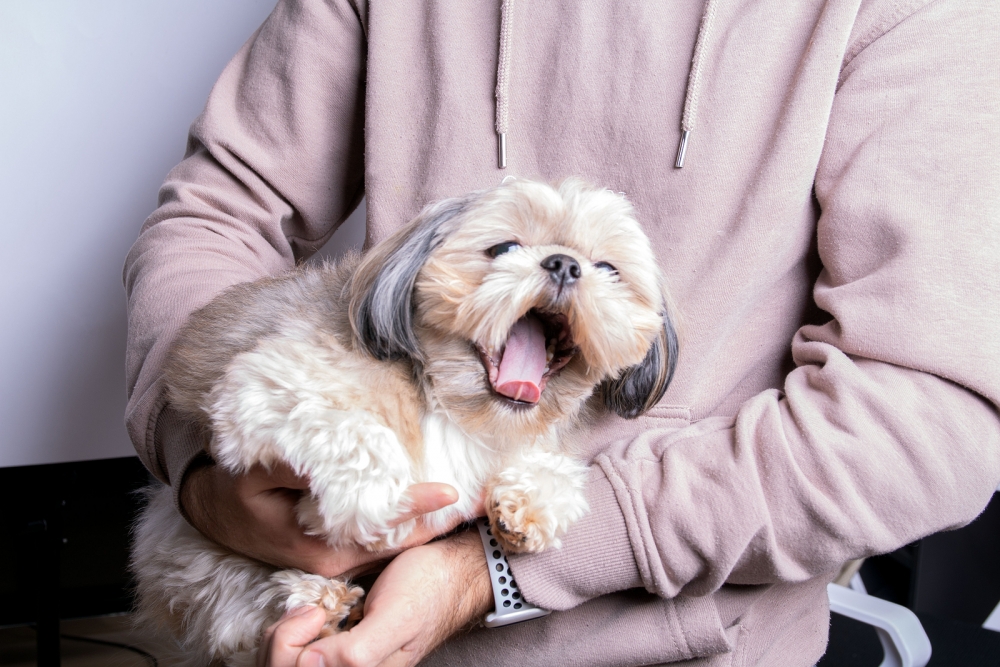
Image Source: moderndogmagazine.com
What is Dog Yawning?
Dog yawning, much like human yawning, is a seemingly simple behavior that can have multiple meanings. While sometimes it simply indicates tiredness, in dogs, it often carries a more complex message related to their emotional state and communication. Understanding canine yawning signals is crucial for building a stronger bond with your furry friend.
The Basics of Canine Communication
Dogs communicate primarily through body language. They use a complex system of signals, including posture, facial expressions, tail movements, and vocalizations, to convey their feelings and intentions. Dog communication yawning is a significant part of this language.
Yawning as a Calming Signal
Dr. Turid Rugaas, a Norwegian dog trainer, popularized the concept of “calming signals” in dogs. These are specific behaviors that dogs use to diffuse tension, avoid conflict, or calm themselves or others in stressful situations. A stress yawn in dogs is one such signal.
Reasons for Dog Yawning While Being Petted
Several factors can contribute to your dog yawning while being petted. It’s rarely a one-size-fits-all explanation, and careful observation is essential.
1. Stress or Anxiety
- The Situation: Perhaps the petting is too intense, too long, or in a place your dog doesn’t enjoy being touched.
- The Message: The dog is saying, “I’m a little uncomfortable with this interaction.”
- Other Signs: Look for other stress signals, such as:
- Lip licking
- Whale eye (showing the whites of their eyes)
- Turning their head away
- Stiff body posture
- Panting (when not hot)
- Raised hackles (the hair on their back standing up)
2. Conflict or Ambivalence
- The Situation: Your dog might enjoy your attention but also feel overwhelmed or unsure. For example, a dog adopted from a shelter might crave affection but also be wary of physical contact.
- The Message: “I want your attention, but I’m also a little unsure about this.”
- Other Signs: A mixed bag of body language, showing both positive and negative indicators. They might wag their tail while also displaying a tense posture.
3. Relaxation or Contentment
- The Situation: Your dog is completely relaxed and at ease.
- The Message: A sigh and a yawn can mean “I feel safe and comfortable with you.” This is less common than the stress yawn, but it does happen.
- Other Signs:
- Floppy body posture
- Closed or half-closed eyes
- Soft facial expression
- A low, relaxed tail wag
4. Boredom
- The Situation: Your petting has become monotonous, and your dog is no longer stimulated.
- The Message: “I’m not really engaged in this activity.”
- Other Signs:
- Looking away
- Lack of engagement
- Restlessness
5. Contagious Yawning
- The Situation: Studies suggest that dogs can “catch” yawns from humans, especially those they are close to.
- The Message: This isn’t necessarily about stress or emotion; it could simply be an automatic response.
- Other Signs: None, except that you were likely yawning just before your dog did.
6. Medical Reasons
- The Situation: Rarely, excessive yawning can be a sign of a medical issue, such as nausea or a dental problem.
- The Message: “I don’t feel well.”
- Other Signs: Loss of appetite, vomiting, diarrhea, drooling, pawing at the mouth. If you suspect a medical issue, consult your veterinarian.
Distinguishing Between Different Types of Yawns
Interpreting dog yawns requires careful observation and consideration of the context. Here’s a breakdown of how to differentiate between the various types of yawns:
| Type of Yawn | Situation | Message | Other Signs |
|---|---|---|---|
| Stress Yawn | Petting too intense; unfamiliar person approaching | “I’m uncomfortable.” | Lip licking, whale eye, turning away, stiff body posture, panting |
| Conflict Yawn | Wants attention but feels unsure | “I’m ambivalent; I want affection but am also wary.” | Mixed body language (wagging tail with tense posture) |
| Relaxation Yawn | Completely relaxed and comfortable | “I feel safe and secure.” | Floppy body posture, closed eyes, soft facial expression, relaxed tail |
| Boredom Yawn | Petting is monotonous and unstimulating | “I’m not engaged.” | Looking away, lack of engagement, restlessness |
| Contagious Yawn | You yawned first | Automatic response; not necessarily emotional | None |
| Medical Yawn | Possible nausea or dental problems | “I don’t feel well.” | Loss of appetite, vomiting, diarrhea, drooling, pawing at the mouth |
Dog Body Language: Beyond the Yawn
Pay close attention to the whole picture. A single yawn in isolation doesn’t tell the whole story. Assess your dog’s overall body language:
- Eyes: Are they soft and relaxed, or wide and showing the whites?
- Mouth: Is it relaxed or tense, with lip licking or teeth showing?
- Ears: Are they forward and alert, or back and flattened?
- Tail: Is it wagging loosely, tucked between the legs, or held high and stiff?
- Posture: Is your dog relaxed and loose, or tense and rigid?
What To Do When Your Dog Yawns During Petting
Your response depends on why your dog is yawning.
- If it’s stress or conflict:
- Stop petting immediately. Give your dog space.
- Reassess your approach. Are you being too forceful? Are you touching a sensitive area?
- Try a different type of interaction. Instead of petting, offer a treat, play a game, or simply sit quietly nearby.
- Build trust gradually. If your dog is newly adopted or has a history of anxiety, take things slowly.
- If it’s boredom:
- Change up the petting. Vary the pressure, location, and rhythm.
- Introduce a new activity. Offer a toy, go for a walk, or start a training session.
- If it’s relaxation:
- Continue what you’re doing. Your dog is enjoying the interaction!
- If it’s contagious:
- Enjoy the moment of connection.
- If it’s medical:
- Consult your veterinarian for a checkup.
Fathoming Calming Signals in Dogs
Calming signals are crucial to dog-dog and dog-human interaction. Recognising these subtle clues can prevent escalation of stressful situations. Here’s some examples:
- Turning the head away: Avoiding direct eye contact to show non-aggression.
- Lip licking: Reducing tension or signaling discomfort.
- Yawning: As described above, indicating stress, ambivalence, or an attempt to calm others.
- Slow movements: Avoiding fast, potentially threatening actions.
- Freezing: Stopping all movement to assess a situation or avoid conflict.
- Play bow: A clear invitation to play, used to lighten tense situations.
- Sniffing the ground: A displacement behavior used to diffuse tension.
How to Build a Stronger Bond Through Communication
By learning to interpreting dog yawns and other canine body language, you can:
- Improve communication. You’ll be better able to “hear” what your dog is trying to tell you.
- Reduce stress. You can avoid situations that make your dog uncomfortable.
- Strengthen your bond. Your dog will feel safer and more secure with you.
- Prevent behavior problems. By addressing your dog’s needs early on, you can prevent issues from escalating.
Dog Yawning Petting: A Summary
Dog yawning petting has multiple meanings, the key to interpreting this behavior lies in observing the overall context and reading your dog’s body language. It could be a stress signal, a sign of relaxation, boredom or even a contagious yawn. By being observant and responsive to your dog’s cues, you can foster a stronger, more trusting relationship.
Frequently Asked Questions (FAQ)
Q: What is a “stress yawn” in dogs?
A: A stress yawn is a yawn that occurs when a dog is feeling anxious, uncomfortable, or conflicted. It’s often accompanied by other stress signals like lip licking, whale eye, and a stiff body posture. It’s not necessarily a sign of extreme distress, but rather a way for the dog to try to calm itself or the situation.
Q: Can I stop my dog from yawning when I pet him?
A: The goal isn’t necessarily to stop the yawning, but to identify the underlying cause. If the yawning is due to stress or discomfort, you should adjust your approach to make your dog feel more at ease. If it’s due to boredom, try engaging your dog in a more stimulating activity. If it’s relaxation, continue what you’re doing!
Q: Why does my dog yawn when I hug him?
A: Hugging, while a common expression of affection for humans, can be perceived as restrictive or threatening by some dogs. If your dog yawns, licks his lips, or becomes stiff when you hug him, it’s likely a sign of discomfort. Consider showing affection in ways that your dog enjoys more, such as petting, scratching, or playing.
Q: What if my dog only yawns when strangers pet him?
A: This is a common scenario. Your dog is likely feeling wary or anxious around unfamiliar people. Encourage strangers to approach your dog slowly and calmly, avoiding direct eye contact. Allow your dog to approach them on his own terms. It might also be useful to have the stranger offer a treat to create a positive association.

Hi, I’m Mette Morgan—a lifelong pet enthusiast and the heart behind PetNobs.com.. My journey with animals began at an early age, and over the years, I’ve gathered invaluable experiences and insights on everything from everyday pet care to the unique quirks each animal brings to our lives. Here at PetNobs, I share my genuine passion, practical tips, and personal stories to help you create a loving, well-informed environment for your furry, feathered, or scaled friends. Welcome to my little corner of the pet world—it’s a joy to have you here!